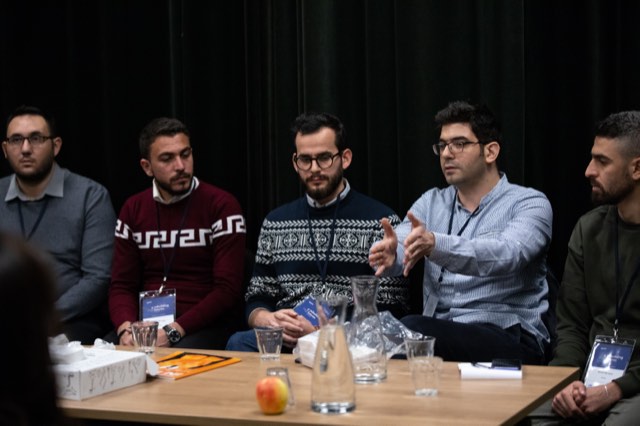
Creating market opportunities for Syrian and Jordanian entrepreneurs.
The brief was blunt: Syrian- and Jordanian-owned businesses were selling to whoever walked past the door. Three years and 1,500 businesses later — catalogues photographed, payments connected, delivery arranged, and the owner trained to run all of it after we left.

How can e-commerce help Syrian and Jordanian entrepreneurs reach new markets?
A Syrian- or Jordanian-owned business in Jordan usually has the same problem, whatever it sells: the product is good, and nobody outside the neighbourhood knows it exists.
Physical footfall sets the ceiling. There is no catalogue a buyer in Riyadh could look at, no payment method a customer outside Jordan could use, no delivery arrangement that works past the city limits. The business is not failing — it is capped.
E-commerce removes the cap, but only if someone does the unglamorous work underneath it: photographing the catalogue, connecting a payment gateway, arranging logistics that actually deliver, and training the owner to run all of it once the programme ends.
That is what the World Bank asked us to do, 1,500 times.
approved_for_web: false in the media manifest. The image exists and is processed; it renders the moment that flag flips.approved_for_web: false in the media manifest. The image exists and is processed; it renders the moment that flag flips.What was the challenge?
Small and medium enterprises across Jordan — with a deliberate focus on women-led, home-based and Syrian- and Jordanian-owned businesses — could not digitise operations or reach buyers beyond their immediate area.
The World Bank needed a delivery partner with three things at once: real operational knowledge of e-commerce, credibility with entrepreneurs on the ground, and the capacity to run an intervention at scale across two years without quality collapsing.
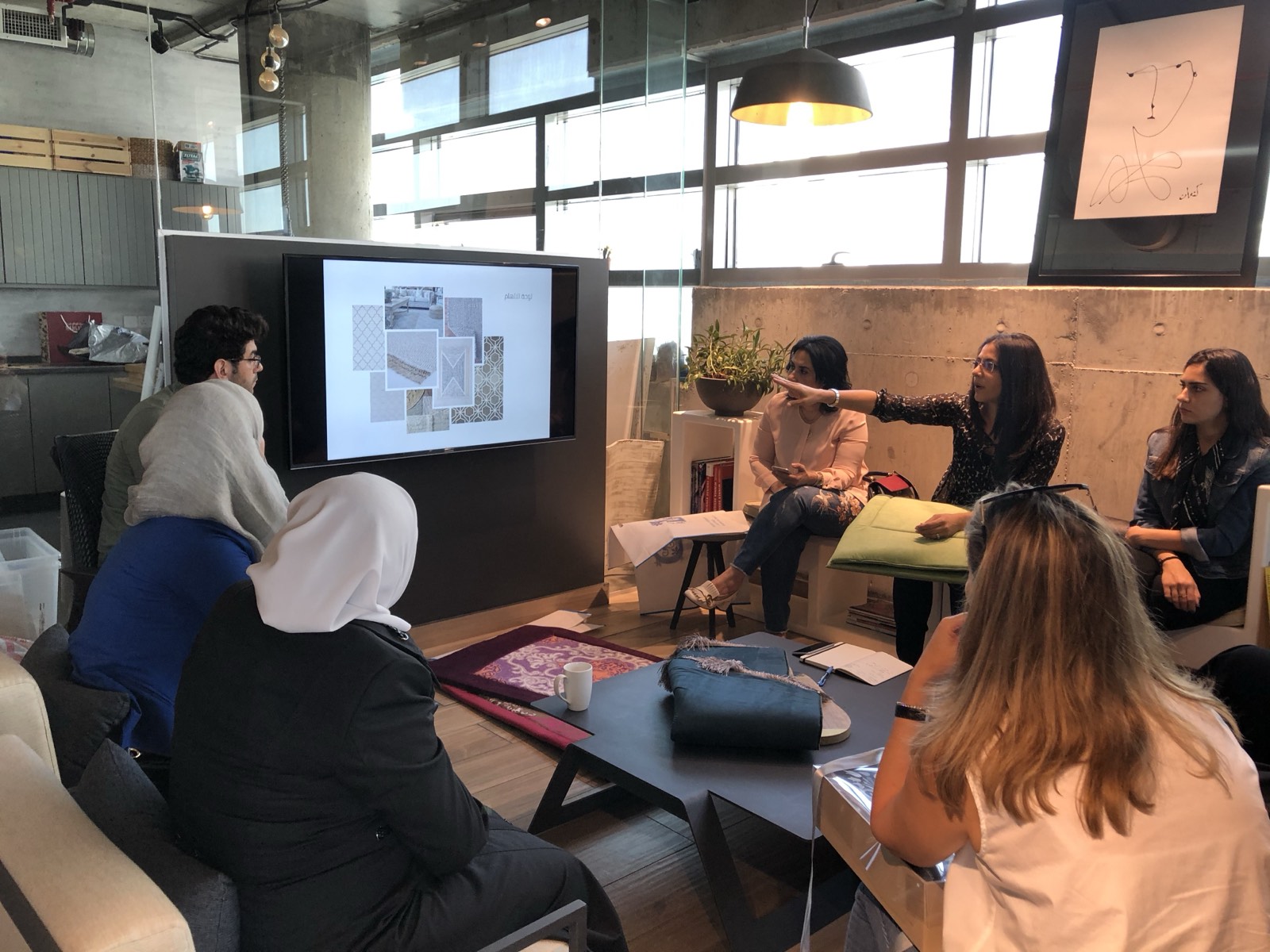
What did Umbrella500 build?
- Jedad — a B2B online marketplaceRather than sending 1,500 businesses to compete as individual storefronts, we built a single marketplace connecting them directly to buyers, including buyers in the GCC. Scale became an advantage instead of a fragmentation problem.
- Business diagnostics and growth plansEvery participating business received a structured diagnostic and a personalised plan, so support matched actual readiness.
- Hands-on e-commerce integrationCatalogue photography, product listings, payment gateway connection and delivery arrangements — done with the owner, not for them.
- Mentorship and expert accessOne-to-one consulting and group workshops covering marketing, financial management and AI adoption, delivered by local and international experts we recruited and managed.
- Tools and automationPractical systems to reduce the manual workload of running an online business, so the operation stayed viable after the programme closed.
approved_for_web: false in the media manifest.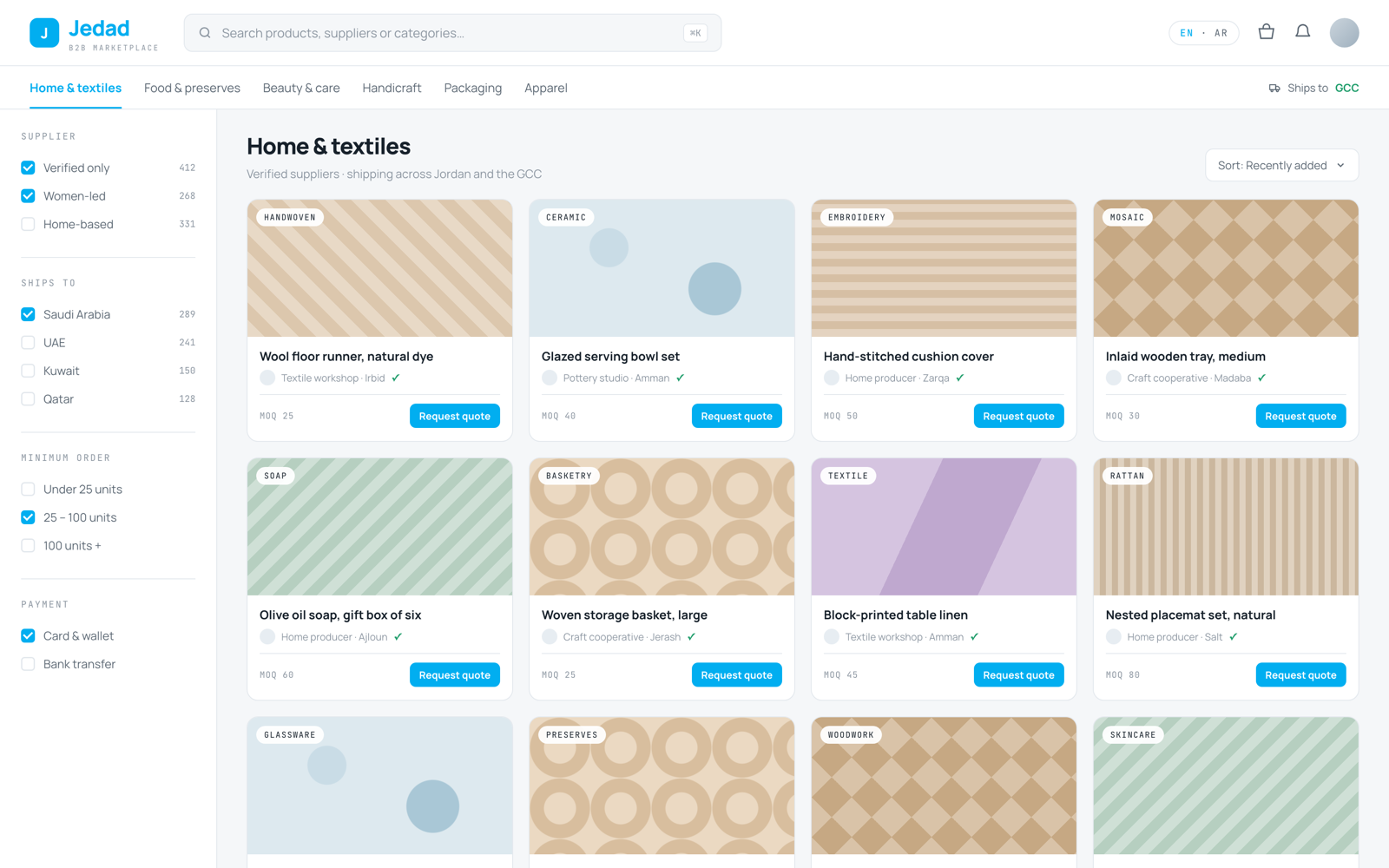 Illustration
What did the redesign change?
Design guides were produced for nine product categories. Three of them are shown here as they were delivered — the original product on the left, the redesigned one on the right, and the specific change written underneath.


The redesign above is what made the order below possible.
Repackaging turned loose bars into something a wholesale buyer could shelve, ship and reorder — the step between a good product and a purchase order.

What were the results?
GCC market — demand against confirmed sales
Demand generated through Jedad against sales confirmed on improved products within the programme window. The gap is the headroom the marketplace opened.
Why did it work?
Local understanding, international standards.
Our team lives and works in this region. Owners were coached by people who understand the market they sell into.
Support matched to readiness.
A business with a working product needed different help from one still defining its offer. The diagnostic-first approach meant nobody sat through irrelevant training.
We built the market, not just the stores.
Jedad gave 1,500 businesses a buyer-facing channel none could have built alone.
We designed for our own absence.
Every owner was trained to operate their own store. The programme ended; the businesses did not.
Umbrella500's approach was both strategic and practical — bridging vision with execution. The programme created real, measurable outcomes for our beneficiaries.
 Giacomo de GiorgiSenior Consultant, The World Bank
Read the World Bank's own report.
Jedad: Promoting Market Opportunities for Refugee and Host Community Businesses in Jordan
The World Bank's published account of the programme — the design, the delivery and the outcomes. Our co-founder Saleem Najjar is a named co-author, third of four on the paper, which you can check on worldbank.org rather than take from us.
PDF · documents1.worldbank.org- Umbrella500 case study PDFPlaceholder — not yet produced for this engagement. Cases 02 and 03 have one on file.