Design thinking training,
delivered by the founders.
Innovation and entrepreneurial-thinking training for programme cohorts and institutional teams. Eight published topics taught against each participant's own product, then a revision loop that changes it.
The method the World Bank ran with 200 firms in Jordan. It finished with nine new collections.
We decline two-hour innovation sessions booked as a team-building exercise.

What the engagement gives you. Cohort volume — firms trained, sessions run, guides produced — sits in sections 5 and 7 with the client work.
Everyone leaves energised.
Nothing leaves changed.
Three failures, and the third is the one nobody says out loud because it is about who is standing at the front.
The wall of ideas with no constraint
Two days of divergent thinking, four hundred sticky notes and a photograph of the wall. Ideation without a real constraint — this maker, this material, this price, this shipping cost — produces volume rather than options. The constraint is what makes an idea decidable, and it is usually the thing the facilitator does not have.
No artefact to take away
A workshop that ends in a summary deck ends. If nobody leaves holding something they have to bring back changed, the session was an experience. The Jordan programme required participants to return to later sessions with revised designs of their own products, and that requirement is most of the method.
A facilitator who has never shipped
Design thinking is easy to teach and hard to teach credibly. A room of business owners can tell within twenty minutes whether the person at the front has ever priced a product, lost money on a batch or dealt with a customer who returned one. If they conclude you have not, the rest of the day is politeness.
The common failure is that the training was designed to be delivered rather than to change something. A session with an artefact, a constraint and someone credible in front of it is a different product from the one usually sold under this name.
Eight topics, and
they are published.
This is the content of the two capacity-building workshops the World Bank documented, listed in section IV of its report. You can read it before you buy it, which is unusual enough in this market to be worth saying.
The concept of design
What design is actually deciding, before anyone draws anything.
Know your customers
Who buys this, where they are, and what they are comparing it to.
What it requires to be creative
The working conditions creativity needs, rather than the personality it supposedly needs.
Problem solving, two ways
The traditional route set against the design-thinking route, on the same problem.
Companies that work this way
Airbnb and Apple — examined for the mechanism rather than admired for the outcome.
And closer to home
Careem, and what a regional company changed to make the service usable here.
The importance of prototyping
Making the cheapest possible version of the idea before committing materials to it.
Testing and optimisation
Putting it in front of a buyer and changing it. The two screens in the photograph above say exactly this.
Sessions run in Arabic or English. On the Jordan programme the same material also became two online courses so that firms outside the workshop cities could take it, which is the version we now recommend for any cohort spread across governorates.
The session is not the unit.
The loop is.
A workshop is a single pass. What changed products on the Jordan programme was a requirement that sounds administrative and is the entire method: participants had to come back with a revised design based on the feedback they were given, and then be given feedback on that.
Why the loop is the expensive part
One session is cheap. Four sessions with revision work in between is a commitment from the maker as much as from us, and it is the reason this tier reached 50 firms rather than 200.
It is also why we will not sell a single innovation day. The single day is the part of the method that does not work on its own.
What the loop does not fix
It improves the product. It does not create demand. Of the seventy producers taken through the full design cohort, thirty sold inside the programme window — the rest ended with better goods and no buyer yet.
Design work belongs next to market access, which is why every programme we run puts them in the same scope rather than sequencing one behind the other.
Drag the handle.
That is what the
loop produced.
Three products from the Jordan cohort, before and after the design sessions. Both halves of each pair are photographs from the World Bank's published report. Nothing is retouched and nothing is staged.




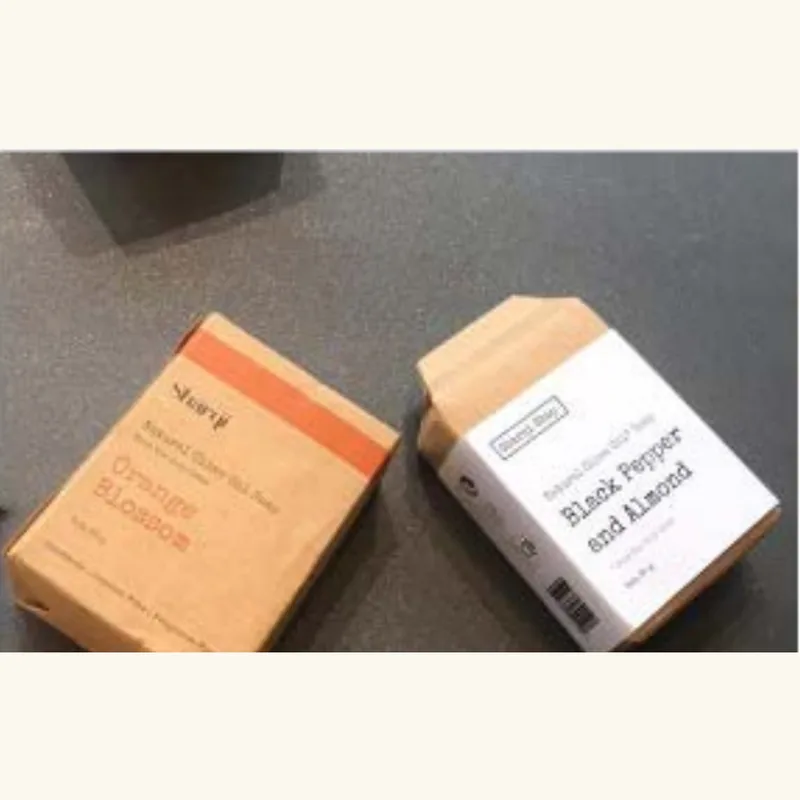
The third one is the useful example, because nothing about the product improved. Innovation work is often assumed to mean a new product. Most of the value in a cohort like this sits in the last two metres — the box, the label, the weight, the shipping class.
The founders deliver it.
There is no bench behind them.
The reason to check who is standing at the front is section 3.03 above. Here they are, with the part of their history that makes them credible to a room of owners.

Saleem Najjar
Co-founder · serial entrepreneur & lead coachCo-founder of ShopGo, which was acquired, and eleven years building companies in this region. He leads the entrepreneurship training personally, and he is the third of four named authors on the World Bank report that documents the programme this page draws on.

Noora Shanak
Co-founder & COO · technology and e-commerceTwenty years in e-commerce, and Co-Founder and COO of ShopGo, where she helped more than a thousand businesses across MENA launch and grow online. She co-delivers the training, and she is the reason the sessions can answer a pricing question with an actual number.
Behind the method: Majd Shams, who has taken more than 140 startups through incubation and acceleration and holds an MBA and an MSc in innovation management. He is a principal architect of how these sessions are structured, and he specialises in the part this page is about — design thinking, business model innovation and investment readiness.
Four sessions,
and the gaps between them.
The gaps are where the work happens. A programme that books four consecutive days has bought the sessions and skipped the method.
The revision happens in the gap. Book four consecutive days and you have bought the sessions without the method.
Four bookings
we turn down.
The first one comes up most often and it is the one we lose money on by refusing.
- A single day, as a morale event. The method needs a gap and a revision. A day produces a good mood and a photograph, and a facilitation agency will do it better and cheaper than we will.
- A cohort with no product and no service yet. Design thinking applied to nothing produces a business plan. Ideation-stage founders need a different curriculum, and it is the one on our skills training page.
- Corporate innovation theatre. An internal programme with no budget to build anything at the end. We have taken one of these and it was a waste of everyone's time — the ideas were good and there was never a route to funding them.
- Accredited certification. If the deliverable is a recognised qualification, that is an awarding-body relationship and a different compliance burden. We produce changed products and a certificate of attendance.
Umbrella500's approach was both strategic and practical — bridging vision with execution. The programme created real, measurable outcomes for our beneficiaries.
 Giacomo De GiorgiSenior Consultant · The World Bank
“Bridging vision with execution” is the polite version of the argument on this page. The execution half is the revision loop, and it is the half that gets cut when a training budget is squeezed.
The ones that decide it.
Can you run this for our own staff rather than a beneficiary cohort?
Yes, and the loop still applies — your team brings a real internal problem to session one and a revised approach to session two. What changes is the artefact: a service, a process or a policy rather than a product on a table.
How large can a cohort be?
The group workshops ran with 200 firms on the Jordan programme. The revision loop with individual feedback ran with 50, and that ratio is roughly right — expect about a quarter of a workshop cohort to be affordable at the intensive tier.
Where the budget will not stretch, the written guides reached a further 150 firms who never attended anything, which is the cheapest tier and the one worth protecting.
What language do you deliver in?
Arabic or English. The Jordan sessions ran in Arabic, including the slides in the photograph at the top of this page.
Do we need a designer on the programme too?
For product work at any depth, yes. On the Jordan programme we ran a market search to find a design firm capable of it and then managed them through the intervention. Sourcing and managing that kind of specialist is its own service and it is described on our mentor sourcing page.
What do participants actually take away?
A revised product or service, the feedback record behind it, and the category guide for their product type. On the Jordan programme the guides covered nine categories from prayer rugs to jewellery boxes, plus a colour and branding guideline.
Can it be delivered online?
The teaching can, and on the Jordan programme two online courses were produced for exactly that. The feedback loop works far better in a room with the product on the table, because most of the useful feedback is about weight, finish and materials.
How do we start?
Send us photographs of what six of your participants currently sell. That tells us more in ten minutes than a scoping call does in an hour, and it is how we decide whether this is the right training for the cohort at all.
Show us what they
currently make.
Photographs of six participants' products beat a scoping document. Send those, or the cohort and the timeline if you have not got them yet.
Or write directly: saleem.najjar@umbrella500.com